
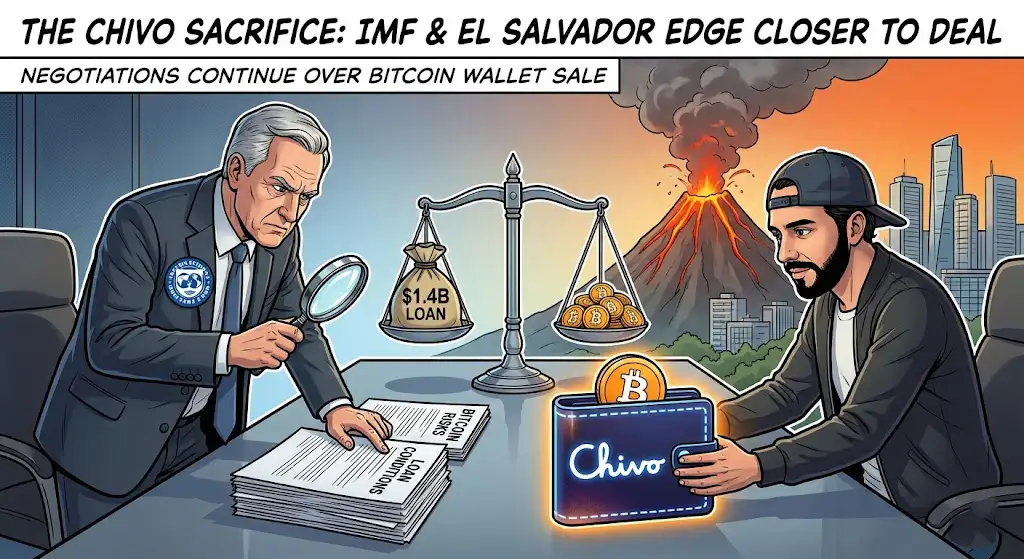
- As of December 22, 2025, the IMF and El Salvador are in “advanced negotiations” regarding the second review of their $1.4 billion loan program.
- Discussions are centered on the sale of the government-run “Chivo” wallet, signaling a move to privatize or unwind the state’s direct role in crypto infrastructure.
- While the IMF pushes for “mitigating risks,” reports indicate El Salvador continues to buy 1 Bitcoin daily, with treasury holdings exceeding 7,500 BTC.
- The talks aim to finalize a staff-level agreement that balances President Bukele’s Bitcoin adoption with the fiscal discipline required for international financing.
The IMF and President Nayib Bukele have been playing diplomatic poker for a long time, and it has reached a crucial new level. On December 22, 2025, the IMF said talks are “well advanced” to sell Chivo, the state-sponsored Bitcoin wallet that was the country’s crypto experiment flagship.
The IMF has warned for years that government exposure to Bitcoin price changes threatens financial stability. By considering selling or privatizing Chivo infrastructure, El Salvador appears to be making a strategic move. This would legalize Bitcoin without government interference in the “casino floor.”
“Mitigating Risks” vs. “Buying the Dip”
Despite the progress on the Chivo wallet, the ideological chasm remains wide. The IMF’s statement highlighted that discussions are still ongoing regarding the broader “Bitcoin project,” specifically focusing on:
- Transparency: Demanding clear accounting of government Bitcoin trades (which have often been opaque).
- Risk Mitigation: Limiting the public sector’s exposure to crypto assets.
- Voluntariness: Ensuring that the “mandatory” acceptance clause of the original Bitcoin Law remains effectively voluntary in practice.
But what happens on the ground tells a different story. Just days before the IMF statement, news broke that El Salvador had bought another 1,000 BTC, and the National Bitcoin Office is still running its “1 Bitcoin a day” program. This makes things tense because Bukele is trying to get a traditional fiat lifeline ($1.4 billion loan) while also doubling down on the asset class that the lender is most afraid of. The IMF wasn’t all bad news, which is interesting. The fund praised El Salvador’s economy, saying that it is growing “faster than expected” and that real GDP is expected to grow by 4% by 2025.